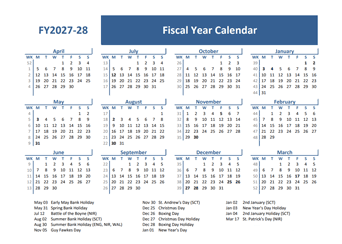
Ever wondered how companies keep their financial ducks in a row when the calendar year doesn’t quite do the job? The Fiscal Year 2027 Calendar is where this magic happens. It’s not just a set of dates; it’s the backbone for budgeting, audit cycles, and everything financial planning in many organizations. Let’s cut through the noise and talk about what makes the FY2027 calendar tick, why it’s pivotal, and how you can get ahead with it.
Understanding What a Fiscal Year Really Means
The fiscal year isn’t always January 1 to December 31. Heck, many businesses can’t align with that because their operations demand different timing. The fiscal year is a 12-month period organizations use to report their financial statements and plan budgets. For example, according to the University of California, Irvine’s accounting office, these fiscal periods help track financial activities beyond the confines of the standard calendar year.
Here’s the kicker: Although the US federal government’s fiscal year runs from October 1 to September 30, other entities like companies or schools choose dates that suit their cash flow, tax situations, or operational cycles. This variance is why having a clear Fiscal Year 2027 Calendar is essential for precise financial planning and reporting.
Fiscal Year 2027 Key Dates: When Does It Start and End?
Expected Start and End Dates of Fiscal Year 2027
| Fiscal Year | Start Date | End Date |
|---|---|---|
| FY 2027 (Federal Govt) | October 1, 2026 | September 30, 2027 |
| Common Corporate FY | January 1, 2027 | December 31, 2027 |
| Alternative Fiscal Year (Sample) | July 1, 2026 | June 30, 2027 |
Not every fiscal calendar will run the full familiar calendar months. Schools or retailers might adopt a different system to align with academic or seasonal sales cycles. For instance, the Fiscal Calendars 2027 templates list various common fiscal year starting points, handy if you’re building your own or need reference points.
Why Should You Care About the Fiscal Year 2027 Calendar?
Think of a restaurant owner on 7th Avenue, scrambling to get a grip on their tax filings and inventory purchases aligned with their supplier contracts — all tied to fiscal periods, not the calendar year. That’s the reality many businesses face. The FY2027 calendar is more than just dates; it impacts:

Source: www.calendarpedia.com
- The timing of financial reporting and audits.
- Budget formulation and revision schedules.
- Tax planning and regulatory compliance cycles, especially for government contractors.
- Payroll scheduling, where many rely on resources like the 2027 payroll calendar provided by federal agencies.

Source: www.calendarpedia.com
Fiscal Periods and the 4-5-4 Calendar: What’s That Got to Do With Fiscal Year 2027?
Retailers, anyone? The 4-5-4 calendar is a bit of wizardry used by retail sectors to break each quarter into two 4-week and one 5-week period, keeping comparative sales straightforward. According to the National Retail Federation, many big chains use this to normalize their sales reporting, which ties directly into how they view their fiscal year.
For instance, a retailer might start their fiscal year on February 1, 2027, and divide it into four quarters of 13 weeks each using the 4-5-4 pattern for optimal comparisons. That’s a clever way to slice and dice a complex year and still keep shareholders and managers sane.
How to Use the Fiscal Year 2027 Calendar to Drive Your Business Strategy
Let me lay it out: ignoring fiscal year dates or thinking they’re just for accountants is a rookie mistake. Planning your project launches, marketing pushes, and financial reviews around fiscal periods keeps your entire operation humming. Say you manage a nonprofit: aligning your grant applications and reporting to FY2027 deadlines explained by the NOLA Public Schools fiscal calendar can mean the difference between funding success or failure.
Bonus tip? Consider the challenge of converting between fiscal and calendar years if you’re switching your accounting system or merging with another company. Misaligned fiscal years can trip up reconciliations and tax filings — don’t let that happen.
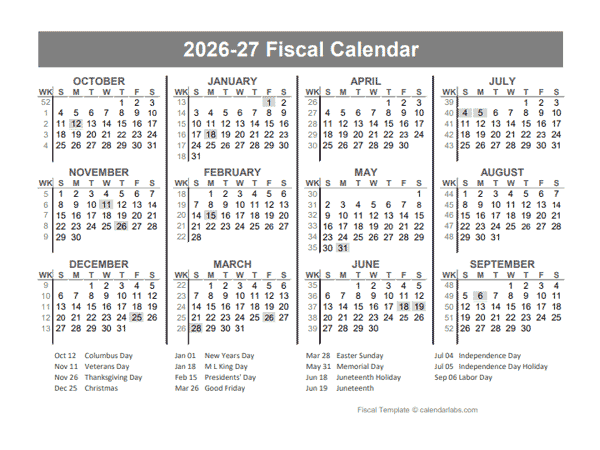
Source: www.calendarlabs.com
Frequently Asked Questions About Fiscal Year 2027
What is the official start date of Fiscal Year 2027 for the US federal government?
The US federal government’s fiscal year 2027 officially starts on October 1, 2026, and runs through September 30, 2027.
Can a company’s fiscal year differ from the calendar year?
Absolutely. Businesses often adopt fiscal years that better align with their unique sales cycles, tax planning, or operational needs, which may not match calendar years.
How does the 4-5-4 calendar impact fiscal year planning?
The 4-5-4 calendar breaks the fiscal year into consistent blocks to make sales comparison easier, especially for retail chains who face seasonal purchase patterns and calendar variance.
Where can I find printable Fiscal Year 2027 calendars?
You can find several free downloadable and printable templates for FY2027 calendars at CalendarPedia’s Fiscal Calendars 2027 page.
What challenges arise from converting fiscal years to calendar years?
Converting between the two can complicate financial statements and tax filings, requiring cautious planning, as explained by experts at the Infor Global Community.
Disclaimer: All dates and information are based on the most recently available official sources and are subject to change. Always verify with the official institution website for the most current details.

Kurt Massey focuses on helping busy professionals elevate daily productivity through actionable organizational tips and downloadable resources like a custom printable calendar. From mapping out a high-efficiency monthly planner to building an intentional holiday schedule. Kurt Massey provides readers with the exact tools needed to turn chaotic routines into streamlined systems so that living well and working efficiently come naturally.